UAE businesses now have until January 31 to be 'ESR' compliant

UAE businesses now have until January 31 to be ‘ESR’ compliant

The UAE ushered in the New Year with a dazzling display of resolve, commitment and hope. And on New Year’s Eve, businesses also celebrated the one-month extension given them to be Economic Substance Regulations (ESR) compliant.

The ESR Notification and the ESR Report were earlier due on December 31, 2020 and can now be submitted on or before January 31. The extension given is not just a proactive step but a big relief for businesses for many reasons.

A rush jobs

Having submitted ESR notifications in June last, many businesses didn’t realize that the scope of ESR was thoroughly amended in September. They were thus caught in a sudden year-end rush for the compliance resulting in unreasonable advisory costs and arbitrary data calculations.

Businesses should make the best use of the one-month extension to examine the ESR implications and undertake compliance works accordingly.

Amendments

Businesses that have already submitted the Notification and/or ESR Report have an option to amend the submission to correct any errors. Such corrections should ideally not result in financial penalties.

Coordination

As ESR covers multinational groups for many transactions, the personnel in the UAE faced a particular dilemma as overseas colleagues were on vacation during Christmas/New Year. The information in the ESR Report are critical for the authorities to determine whether the ESR tests has been met. The data used should be correctly calculated and explained in the report.

Seeking clarity

Businesses would also look up to the authorities for clarity on various issues. The ‘directed and managed’ test has been through an intense debate. Official guidance states that an adequate number of board meetings must be held and attended in the UAE.

Further, the board members (or equivalent) must be physically present in the UAE when taking strategic decisions.

Clarification is required on the meaning of ‘strategic decision’ in scenarios where no board meetings were held throughout the reportable period and/or where no strategic decisions were taken if such meetings were held outside the UAE.

The Economic Substance Regulations have fairly significant financial and global implications. The one-month extension is one of the rare opportunities for businesses to start over one more time to ensure accurate compliance…

News Courtesy : Gulf News

For more information on these services, please contact us:

Tel: +971 43 23 1183
Mob: +971 55 899 5971
E-mail: mail@alnuaimiauditors.com


5 Tips to Keep your Business Accounting Organized

Organizing your business activities is an extremely crucial step when you start your organization. A sound planning and setting up certain guidelines to manage various business activities has always proved to be beneficial for businesses, irrespective of the size or revenue. The amount of time and energy you spend in devising a plan to run your business, says a lot about your company’s future position. In fact, the more you plan and strategize, the better it is for your business’ survival in the market.

There are many upsides to keeping your business accounting organized right from the start. With a methodical and an organized approach to business accounting in place, several crucial decisions on cash flow can be made on-the-go, and further plans to grow and develop can also be devised. 

These five tips can help even the smallest businesses achieve a well-kept set of books and financial clarity in the long run.

Separate your personal and business accounts

One of the best ways to manage your business’ finances in the most organized way possible is by separating personal expenses with your business expenses. This will not only provide clarity over tax-deductible expenses the business incurs, but also ensure that your overdraft, checking account and credit cards are separate and no business transactions or tax-related charges are affected.

Avoid cash transactions, wherever possible

Cash transactions are hard to track and manage. Expenses paid in cash can be tedious to track and reconciling cash outgoings with receipts can be tricky and time-consuming. Thus, it is always advised that all business transactions should take place in the form of either digital payments, online banking services or cheques, so that these expenses can be tracked, seamlessly.

Maintain a solid tracking of accounts receivables and payables

Maintaining continuous tracking for receivables and payables will help you track payments more seamlessly. Accounts receivables refer to the amount that a company is entitled to receive from its customers for goods or services sold on credit. Management of receivables refers to planning and controlling of debt owed to the customer on account of credit sales.  In simple words, successful closure of your order to sales is determined only when you convert your sales into cash. Till your sales are converted into cash, you need to manage ‘how much you need to receive? from whom? And when? Having a proper tracking system lets you control and manage when your clients have paid and how late outstanding accounts are, so you can keep the cash flow smooth during the month by chasing up payments.

While accounts payable are short-term liabilities that need to be honoured within a specific date, any delayed payment will attract additional charges in the form of interest and later payment charges. Also, delayed payment may create discomfort between both the parties and gradually impact the credibility of the business which in turn leads to disruption of the supplies. Thus, maintaining accounts payable will help ensure you aren’t duplicating or being late on your supplier payments.

Invest in an accounting software that will digitize your company data

Manual filing has flown out of the window is no longer appreciated, especially for MSMEs. The only reason why businessmen choose to start their own company is to grow and expand over the years. Thus, staying compliant with the latest technology comes in handy when your forecast is growth. All the crucial reports and files are best if stored digitally. Optimizing your accounting processes and automating them can reduce your costs and improve your business efficiency greatly. An intuitive business management software helps you automate the most complex processes in a business, to ease you from manually entering information. This also reduces the room for errors which would eventually impact your business performance in the long run.

Every business aims at expanding its processes and make a mark in the industry in the long run. However, not adopting the evolving needs of your business may hamper its growth and success. One of the best methods to run your business smoothly is by choosing a business management software that adapts to your current and future needs.

For more information on these services, please contact us:

Tel: +971 43 23 1183
Mob: +971 55 899 5971
E-mail: mail@alnuaimiauditors.com


ERP - Enterprise Resource Planning

ERP Modules: List of Basic ERP Modules and their Functions

ERP refers to ‘Enterprise Resource Planning’ software which integrates various functions of a business into a single unified system. With a single unified database and by integrating different functions, ERP system helps you get a complete picture of the business.

Just like there are different functions in a business, ERP systems too consist of different modules. Each ERP module is designed to manage the specific function of a business. For example, the inventory management module helps you manage all that is required to manage your stock. Likewise, different types of ERP modules are available to meet specific business needs.

Types of ERP modules

  • Finance management module

Finance management module of ERP system helps in recording and tracking financial information and making it available in the form of financial statements. The key function of the finance module is record keeping, managing accounts receivables, payables, cash management, and on-time generation of financial reports such balance sheet, profit & loss account, cash flow statements etc.

  • Inventory management module

This is one of the key modules of ERP systems. The inventory management module is responsible for optimum management of inventories that ensures uninterrupted production, sales, high customer satisfaction, reduced inventory handling cost and so on. The key function of an inventory management module is storage, track movement of stock, go down management, and insights in the form of reports such as re-order level, movement analysis, stock profitability and so on for optimum inventory management

  • Production management module

Product management module of ERP systems helps in planning and optimizing manufacturing processes such as manufacturing capacity, parts, components, and material resources etc. using the past consumption pattern and the demand. The function of this ERP module is to automate the manufacturing process using the features such as bill of materials (BoM), cost estimations, track additional costs etc. It also includes managing job-work process as well.

  • Purchase management module

The key function of the purchase management module is to streamline the procurement process right from receiving purchase requirements till the goods are received. It includes sending purchase orders, receipt of goods, invoicing, rejections etc.

  • Sales management module

Sales management module helps in improving the process efficiency by streamlining the order management system right from order-to-Invoice-to-cash. This module of ERP system helps you manage all sales-related functions such as sending quotation, order processing, stock delivery and invoicing, and real-time reports.

  • Payroll management

Payroll management module of ERP system helps you manage the pay-outs of your employees. It includes managing attendance, salary advance, production tracking, salary processing, payment remittance etc. This also helps you keep a complete database of employees and auto-generated reports provide you complete insights on employee’s pay-outs.

There are different types of ERP modules such as CRM, supply chain management etc. designed to manage the specific function of the business. Basis the business requirements, different modules can be integrated with ERP systems.

Similar to ERP system, there are also integrated business management software, specially designed for small and medium business, providing a complete solution within a single software. The best part of integrated business software is that you need not look for a different software or modules to manage different functions of the business. Instead, the same software comes with all the features that are required to manage your growing needs.

For more information on these services, please contact us:

Tel: +971 43 23 1183
Mob: +971 55 899 5971
E-mail: mail@alnuaimiauditors.com


Critical Challenges Related to the New E-Invoicing System

Critical Challenges Related to the New E-Invoicing System

What is E-invoicing?

e-Invoice known as ‘Electronic invoicing’ is a system in which all B2B invoices are electronically uploaded and authenticated by the designated portal.

Post successful authentication, a unique Invoice Reference Number (IRN) is generated for each invoice by IRP. Along with IRN, each invoice is digitally signed and added with a QR code. This process is collectively called as e-invoicing under GST

Challenges surrounding e-invoicing

While the government aimed at simplifying the invoice generation process by introducing e-invoicing for businesses, there seem to be some resistance from the B2B business owners. Let’s take a look at some of the challenges which will be faced by taxpayers on the implementation of the new provisions under e-invoicing:

  • Capturing real time data through an integrated ERP system

Invoice generation is an activity that cannot be pushed to a later stage. As soon as there is a transaction between two parties, the invoice needs to be generated instantly. Since invoice generation is a key process in every business, it is imperative that implementation of e-invoice is done seamlessly. A software or the ERP system that you currently use for your businesses process should be such that it allows you to easily modify the standard invoice generation process as per the recently launched program without having to change your methods.

  • Sorting B2B and B2C invoices

E-invoicing applies only to B2B invoices and not B2C invoices. B2B requires filing of both E-way bills and e-invoices, whereas B2C invoices only require e-way bills to be generated (wherever applicable). Thus, in case you want to generate an e-way bill for a B2B invoice you would require to filter out B2B invoices from a big stack of invoices. This process in itself is extremely time consuming and will take a lot of effort to sort the invoices.

  • Tracking of invoices

Though the offline tool for generating e-invoices is available for anyone to download and authenticate their invoice data. However, this manual process is quite cumbersome since they have to raise the GST invoice in their existing accounting system and upload the same invoice data in the offline utility to generate JSON files. Once the JSON file is generated, it is then uploaded on Invoice Registration Portal (IRP) to generate final e-invoice with Invoice Registration Number (IRN), digital signature & QR code. While a manual process is suitable for managing lower volumes of invoices, it is not sustainable for businesses generating bulk or high volumes of invoices every day. This challenge can be overcome with a software that helps you track all your invoices, seamlessly and give you the status of each invoice to avoid any mishaps.

  • Revised workflow to process relevant documents

Since, e-invoicing applies only to B2B invoices, thus, a separate workflow has to be created for delivery challans, bill of supply, job work and other similar transactions. This obviously requires additional time and effort, which is definitely not expected especially when there is automation in picture. Thus, a business management software that will help you seamlessly generate e-invoice without impacting the way you use to operate your business will help reduce that extra time and effort to generate these crucial reports.  

E-invoicing is a concept under GST which was implemented in India after several meetings, discussions and feedback sessions. The real challenges and drawbacks can be identified only once the taxpayer starts using it in a full-fledged manner. However, business owners can make the most out of this new process, by choosing a GST software that will assure a smooth transition to an e-invoicing system. E-invoicing solution will enable businesses to perform all necessary e-invoicing functions including:

  • E-invoice generation with IRN and QR-code
  • E-invoice cancellation
  • Bulk upload of e-invoices
  • Upload of invoice data in various file formats like Excel or JSON
  • Smart validation for ensuring compliance
  • Flexibility to generate offline JSON to handle exigency scenarios

For more information on these services, please contact us:

Tel: +971 43 23 1183
Mob: +971 55 899 5971
E-mail: mail@alnuaimiauditors.com


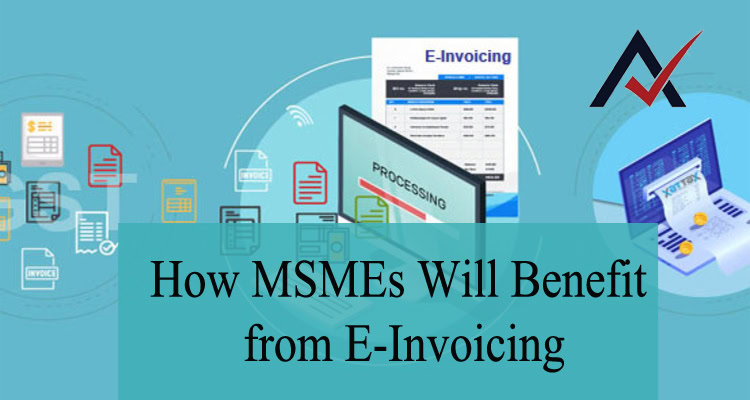
How MSMEs Will Benefit from E-Invoicing

How MSMEs Will Benefit from E-Invoicing

What is e-invoicing?

e-Invoice known as ‘Electronic invoicing’ is a system in which all B2B invoices are electronically uploaded and authenticated by the designated portal. Post successful authentication, a unique Invoice Reference Number (IRN) is generated for each invoice by IRP. Along with IRN, each invoice is digitally signed and added with a QR code. This process is collectively called as e-invoicing under GST

E-invoicing has become a reality for businesses with a turnover of Rs. 500 crores and above, in the preceding year (2019-20), from 1st October 2020. As per the recent notification issued, e-invoicing will be applicable for businesses with a turnover with 100 crores and above from 1st January,2021. It is expected that it will be applicable for all the businesses doing B2B invoicing starting from 1st April,2021.

Which businesses will require to generate e-invoice?

All businesses falling in the above criteria will be communicated to register on e-invoice portal to start e-invoicing mandatorily. Only those businesses who are mandated to generate e-invoice and have registered on the e-invoice portal will be allowed to generate e-invoices.

Once registered, these businesses will have to upload their B2B invoices (Sales, Credit Note and Debit Notes made to businesses, government entities and all types of exports) on e-invoice portal and get it registered before removal of goods from their premises.

This will also facilitate:

  • Generation of e-way bill along with e-invoice
  • Auto-population of information in GSTR 1 of taxpayer
  • Auto-population of information in GSTR 2B of the receiver

e-Invoice system will have multiple options for the taxpayer, using which e-invoice can be generated:

  • Directly entered on the Web (IRP portal)
  • Based on API (Business software communicate with IRP)
  • Offline Tools like Excel (downloaded on e-invoice portal)

Once the invoice is registered on e-invoice portal, a digitally signed JSON along with QR Code, IRN (Invoice Registration No.) and e-way bill no. will be generated. Using that customer can prepare e-invoice.

How is e-invoice different from the current practice of invoicing?

E-invoice is a system in which the invoice needs to be electronically uploaded and authenticated with a unique invoice reference number (IRN) and digitally singed QR code. The change is that the seller needs to print the QR code and IRN number on the invoice before issuing it to the buyer. Businesses using ERP/ business management software that seamlessly connects with IRP system and automatically prints the QR code and IRN on the invoice will find it easy to manage e-invoice requirements without much changes to the business process.

Benefits of e-invoicing for MSMEs

One of the main reasons why the government introduced e-invoicing is to curb tax evasion and reduce fake invoicing. Below are some of the most crucial benefits which MSMEs will have once e-invoicing mechanism takes the forefront:

  • Seamless account reconciliation

E-invoicing can help bridge the gap in data reconciliation to reduce mismatch errors, and data entry errors. It will also be possible to track invoices prepared by the supplier on a real-time basis, which reduces audits by the tax authorities since the required data will be available at the transactional level. The main aim of the tax department is to enable the pre-population of GST returns, which will reduce reconciliation-related problems. Once e-invoicing has been implemented, the data in the invoices can be pre-populated into the relevant tables of the tax returns without the need for fresh data entry.

  • Faster availability of genuine input tax credit

Manual calculations while filing GST returns often lead to errors and with respect to under or over-claiming of input tax credits. A business is entitled to this amount for the tax that is already paid on the product. Any differences in the claiming of ITC can result in huge losses for a business and would also cost the business owner extra to fix the errors. Since details are available in GSTR-2 on real time basis, with e-invoicing, buyer’s ITC eligibility is confirmed

  • Reduced compliance burden

Since systems are integrated with one another, information flows to GSTN system and e-way bill system, which will ultimately reduce compliance. On continuous upload of invoices, most of the details will be pre-populated in the return. All you need to do is simply include the additional details (B2C), verify and file return.

  • Easy tracking of invoices

When using the e-invoicing system, it is easy to monitor where the e-invoice is sent in real-time. You’ll know for sure that the invoice will be submitted and received. The status of the invoice, whether approved, denied or pending by the client, can also be seen.

  • Help MSMEs secure loans faster

Getting loans has always posed a major challenge for MSMEs. To get a loan sanctioned from financial institutions, MSMEs have to furnish a plethora of documents. However, with e-invoicing in place, MSMEs can avail loans, instantly, as banks can rate them on the basis of these invoices.

  • Reducing fake invoices or duplicate invoices

As per the latest State of Tax Justice report, India is losing over Rs 75,000 crore in tax, due to global tax abuse. The non-digitizing of invoices by suppliers has led to an increase in fake/duplicate invoices which ultimately results in tax evasion. Implementation of e-invoice mechanism will help mitigate this tax evasion by keeping a track of fake invoices that are issued, and ensuring a common database is available to tax authorities which will help in driving tax compliance.

For more information on these services, please contact us:

Tel: +971 43 23 1183
Mob: +971 55 899 5971
E-mail: mail@alnuaimiauditors.com


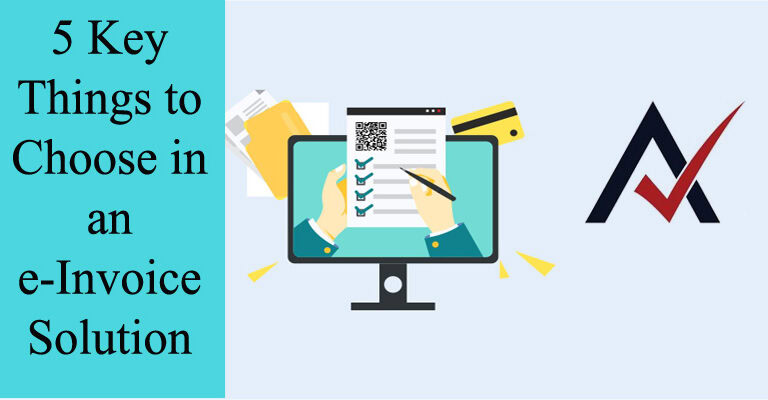
5 Key Things to Choose in an e-Invoice Solution

5 Key Things to Choose in an e-Invoice Solution

1st January,2021, businesses whose turnover is 100 Cr and above will be required to issue e-invoice for all business to business (B2B) and business to government (B2G) transactions. e-Invoicing is a new norm requires businesses to upload and get the invoices authenticated by invoice registration portal (IRP) with an IRN and QR code.

With the implementation of e-invoicing, the businesses need to print QR code which is embedded with an IRN on every B2B invoice before issuing it to the buyer. With the new mandate of e-invoicing, using the right e-invoicing solution will help you to adapt to the new system easily without needing to change the invoicing process that you currently follow.

Today, businesses use different accounting/business management software and invoicing utilities to generate an invoice. Now, it’s time again for businesses to evaluate if the software or utilities that they use is equipped with the right technology. With that in focus, we are listing 5 things that you need to consider while evaluating an e-invoice solution.

5 Things to consider while choosing an e-invoice solution

Generate e-invoice instantly

With the concept of e-invoicing, an invoice remains valid only if it is authenticated by IRP and printed with QR code which is embedded with an IRN number. For this to happen, first, you need to upload the e-invoice details in the prescribed format (JSON) to IRP. Secondly, download the output file (JSON) that is authenticated by IRP with IRN and QR code. Later, you need to print QR code and IRN on the invoices before issuing it to the buyer.

Guess, you can imagine the impact that would have on the invoicing process. A right e-invoicing solution with a capability to generate e-invoice instantly without the need for manual intervention will make it easier and simple. The need is that the software should be able to absorb the complexities by directly sending the details in prescribed format to IRP, download the authenticated details and automatically print QR code, IRN etc on the invoices instantly. Business management software that is designed to directly integrate with IRP portal will make this possible so that the invoicing process remains as always.

Bulk uploading of e-invoice

In certain business situations, you may require to generate bulk e-invoices instead of generating one by one. For example, some businesses follow ‘Maker’ and ‘Checker’ system of invoicing in which invoices are generated by a “Maker” and later verified by a “Checker”. In such scenarios, you should be able to send bulk invoices for generating e-invoices and automatically the software should fetch and print the QR code on the invoices.

Generate e-way bill along with e-invoice

By design, the e-invoice system (IRP) integrates with GSTN and e-way bill system. This means, when you upload an invoice, the IRP portal automatically shares the details of invoice to GSTN system for return purpose and e-way bill system for generating e-way bills. The e-invoice software should leverage on this facility and generate e-way bills alongside generating e-invoice for those invoices that require e-way bill. This way, your efforts and time will be saved.

Cancellation of e-invoice

In some situations, the invoices for which IRN is already generated requires to be cancelled. It could be for various reasons such as duplicate entry/data entry mistake/order cancelled etc. The software should allow you to cancel such invoices and more importantly, automatically send the details to IRP for cancellation of IRN. Also, in case you have initiated the cancellation of IRN from the portal, the software should be able to fetch such details from the portal and update the status of IRN in the books.

Flexibility to use other modes of e-invoice

In case of exigency cases like unavailability of internet services on a system or due to any other reason, if you wish to use other modes of e-invoicing such as offline utility, direct entry on the portal etc. the software should be flexible to allow this. Also, it should fetch the QR Code, IRN etc. from the portal and update the books accordingly.

For more information on these services, please contact us:

Tel: +971 43 23 1183
Mob: +971 55 899 5971
E-mail: mail@alnuaimiauditors.com

Business Impact of e-invoice

Business Impact of e-invoice: What will change?

Invoicing being a key function of every business and e-invoicing is a norm related to it, it is super critical for businesses to understand the concept of e-invoicing and the preparedness that allow you to adapt to the new system of issuing of invoices.

e-invoicing is a process through which business to business (B2B) transactions are authenticated with a unique number known as IRN and QR code by the invoice registration portal (IRP). Read What is e-Invoice in GST? to know more.

What e-invoicing requires?

In the e-invoice system, as a supplier, the moment you create an invoice for your customer, it should be uploaded to IRP where the validation will be done, and IRN along with the QR code will be issued. Next, you need to print the invoice with QR code before issuing it to your buyer.

How is current practice different from e-invoicing?

There is a drastic change if you compare the new norm with the current practice which doesn’t require you to authenticate the invoice. In current practice, as a supplier, you print the invoices, issue it to the buyer and then periodically report the details in GSTR 1. Post that, the buyer gets the visibility of invoices in GSTR -2A.

The other mandate that comes with e-invoicing is that an invoice is valid only if the invoice is authenticated by IRP and the QR code (which is embedded with an IRN) is printed on the invoice. In another way, any invoice without QR code that is authenticated by IRP will remain invalid. This implies that the buyer will be eligible for input tax credit only on the invoices that are authenticated by the IRP portal.

The change and the technology

The new mandate requires you to upload the e-invoice details in prescribed format (JSON) to IRP. Next, download the output file (JSON) that is authenticated by IRP with IRN and QR code. Later, you need to print QR code and IRN on the invoices before issuing it to the buyer.

As a result, the current practice of invoicing will change. First, businesses need to make a provision for real-time upload of invoice data and printing of QR code. This will emphasize the necessity of businesses to have a right technology which assists in real-time and instant generation of e-invoices without need to change the invoicing process.

Secondly, the business behaviour is expected to change where the buyer will drive the supplier to upload the invoices to the government system to confirm his eligible ITC. Therefore, it is evident that buyers will appreciate doing business with the suppliers who recognise the importance of quick and accurate upload of invoices.

Businesses who are using software that directly integrates with the IRP portal will find it easy to manage the e-invoicing requirements. Because the direct integration helps you automatically upload the e-invoice data to the portal and instantly print the QR code into the invoices. This way, you can continue the invoicing process as always without the need to change.

For more information on these services, please contact us:

Tel: +971 43 23 1183
Mob: +971 55 899 5971
E-mail: mail@alnuaimiauditors.com

How to link Tax Registration Number(TRN) with Dubai Customs

How to link Tax Registration Number(TRN) with Dubai Customs

The Federal Tax Authority (FTA) and the UAE Customs Departments are working in collaboration to collect VAT on the import of goods. All the businesses registered under VAT should provide the Tax Registration Number (TRN) to the customs department in the process of clearing the imported goods. The customs department will verify the validity of Tax Registration Number (TRN) in their system and allow the businesses to clear the imported goods without payment of VAT at customs if TRN is updated and found valid.

In other words, if Tax Registration Number (TRN) is linked with Customs registration code (CRN), it allows the businesses to clear the imported goods without payment of VAT at customs and pay later at the time of filing VAT Returns for that period.

If you are registered under VAT but yet to update TRN with Customs department, the following are the options for you to link your Tax Registration Number (TRN) with Customs Registration Number (CRN).

  • Option 1: Update Customs Registration Number in FTA Portal
  • Option 2: Update through the Import Declaration Form
  • Option 3: Update through the Customs Department

Option 1: Update Customs Registration Number in FTA Portal

You can update the Customs Registration Number (CRN) in your FTA Profile. Login to FTA’s e-Services portal using your login credentials and update the CRN from.: https://eservices.tax.gov.ae/en-us/

Option 2: Through the Import Declaration Form

On submitting the Import Declaration Form VAT301, the CRN will be updated in the Customs System. The following are steps to complete the Import Declaration Form.

  • Login to the FTA’s e-services portal using the username and password linked to your TRN
  • Navigate to the VAT tab on FTA e-Services Portal and click on “VAT301 – Import Declaration Form for VAT Payment”
  • Mention the port of entry, customs declaration number, declaration date and then click ‘Fetch associated registration number’ to auto-populate the TRN number.
  • Complete the declaration process and submit the form.

Following this process, the FTA will electronically update the customs declaration at the customs department that the VAT payment has been completed.

Option 3: Update through Customer Department

Using this option, you can provide the TRN to the customs department office. The customs officer will verify the TRN by logging to the e-service portal. Once the officer verifies the TRN, the customs department can update your TRN on the customs department system.

Linking of TRN with CRN is one of the key action for VAT registered businesses, especially for those who are engaged in frequent import of goods. This helps them in the faster and smoother clearance of goods from the customs port and also greatly help in cash flow management.

For more information on these services, please contact us:

Tel: +971 43 23 1183
Mob: +971 55 899 5971
E-mail: mail@alnuaimiauditors.com


VAT Registration in UAE

VAT Registration in UAE

Introduction to VAT Registration in UAE

Being registered under the VAT law means that a business is acknowledged by the government, as a supplier of Goods and Services and is authorized to collect VAT from customers and remit the same to the government. Only VAT registered businesses will be allowed to do the following:

  • Charge VAT on taxable supply of goods and services
  • Claim Input Tax Credit on VAT paid on their purchases, which will be deducted from VAT liability on sales
  • Payment of VAT to the government
  • Periodic filing of VAT return

Apart from the above, all registered businesses have to align their business reporting structure in line with the compliance requirements such as accurate and updated books of accounts, tax paid documents such as Tax invoice, credit notes, debit notes, records to all inward supplies and outward supplies etc. are required to be maintained.

Therefore, understanding the fundamentals of VAT will be one of the important steps for your VAT preparation and obtaining VAT registration will be the first step towards transiting your businesses to the VAT era.

Who should register under VAT?

Are all businesses liable to register under VAT? No, only those businesses crossing the defined annual aggregate turnover threshold are liable to register under VAT. Based on the registration threshold, a business will either be mandated to register or as an option, a business can apply for registration or can seek exemption from VAT registration

On this basis, VAT registration in UAE can be classified into the following:

  • Mandatory VAT Registration
  • Voluntary VAT Registration
  • Exemption from VAT Registration

VAT registration Deadlines in UAE

As a move towards implementation of VAT in UAE on 1st January 2018, the Federal Tax Authority (FTA) is inviting applications for VAT registration. The FTA has opened its portal to allow the businesses to register online. The early call for online registration allows the businesses to be prepared well in advance and be ready to charge VAT from 1st January 2018. The UAE VAT registration in the FTA portal is carried out in a phased manner depending on the turnover of the business.

VAT Turnover Calculation for Registration in UAE

In UAE VAT, businesses whose annual turnover exceeds the mandatory registration threshold of AED 375,000 and the voluntary registration threshold of AED 187,500 are allowed to apply for VAT registration. Therefore, it is crucial for businesses to understand what type of supplies are considered in deriving the annual supplies turnover and how to calculate the VAT turnover for registration in UAE.

How to Apply for VAT Registration in UAE

In UAE, the businesses whose turnover exceeds AED 375,000 have to mandatorily apply for VAT registration. To facilitate the businesses to register, the Federal Tax Authority (FTA) has opened its portal for online VAT registration. The deadlines based on the turnover of businesses are already announced by FTA and the registration will be carried out in a phased manner. While it is crucial for businesses to determine their obligation towards VAT registration, it is also important for businesses to know how to apply for VAT Registration and understand the level of details required to complete the online registration process.

This is because, before applying or starting the online VAT registration process, having a good understanding about the type of details required and steps to complete the online VAT registration will help you to prepare well in advance. As a result, the registration process can be completed easily and can avoid unnecessary delays due to furnishing of incorrect details which could even lead to rejection of registration application.

  • Creation of e-Service Account
  • Login to your e-Service Account
  • VAT Registration Form: The online VAT registration form contains 8 sections as shown below, in under which the details need to be furnished for completing VAT registration
    • About the applicant
    • Details of the applicant
    • Contact details
    • Banking details
    • Business relationships
    • About the VAT registration
    • Declaration
    • Review & submit

VAT Group Registration

In UAE VAT, any person conducting business is not allowed to have more than one Tax Registration Number (TRN), unless otherwise prescribed in the UAE Executive Regulation. Thus, even if you are operating via branches in more than one Emirate, only one VAT registration is required. With a similar objective, if two or more persons are related or associated parties in the businesses, they are allowed to apply for VAT group registration.

For more information on these services, please contact us:

Tel: +971 43 23 1183
Mob: +971 55 899 5971
E-mail: mail@alnuaimiauditors.com


How Dose VAT Sysytem works

How Does VAT System Works?

With the final approval and signing of GCC united VAT Agreement by all the member countries, the taxation system VAT is all set to be implemented in GCC Member States. It is expected to be implemented by 2018 and the formulation of laws and regulations in each of the member countries are some of the major immediate steps involved in the implementation of VAT.

While these countries are preparing for implementation VAT, what does it implies to the businesses, for whom the subject Indirect Taxation is new although it exists in certain business-specific scenario. No doubt, in several ways the business will be impacted. The reason being, indirect tax ‘VAT’ being a transaction-based tax, which requires you to ensure that every transaction recorded are VAT complaint. To ensure compliance, it is imperative for businesses to understand what is VAT? How does VAT system work? Let us discuss.

What is VAT?

Value Added Tax (VAT) is the tax levied at every level of value addition done to the product across the supply chain. It is levied at every point of sale from manufacturer till it is sold to an end consumer. This achieved by allowing tax paid on purchase known ‘Input Tax Credit’ or also known as ‘input VAT’ to be adjusted with the VAT collected on sales knows as ‘Output VAT’. Ultimately, the entire tax is paid by the consumer.

How does VAT system work?

VAT is a consumption-based tax with the provision to allow Input tax credit -Tax paid on purchases to be utilized or set-off against the VAT liability Tax collected on Sale. If there is any balance liability after adjustment, the same needs to be paid to the government.

For more information on these services, please contact us:

Tel: +971 43 23 1183
Mob: +971 55 899 5971
E-mail: mail@alnuaimiauditors.com


VAT Registration Threshold Calculation in UAE

VAT Registration Threshold Calculation in UAE

To determine whether the value of supplies has exceeded the mandatory registration threshold limit or the voluntary registration threshold limit, the following needs to be considered.

  • The value of taxable supply of Goods and Services: Taxable supplies refers to all the supplies of goods and services made in UAE on which VAT is levied at the standard rate of 5% including zero-rated supplies. This does not include the notified supplies which are exempted from VAT.
  • The value of reverse charge SuppliesReverse charge supplies are those notified supplies on which the recipient or the buyer are required to pay the VAT to the government unlike forwarding charge, where the supplier will collect VAT from the buyer and pay. The value of such supplies needs to be considered in arriving at the turnover threshold for VAT registration.
  • Imports: The value of taxable goods and services imported on which the importer is liable to pay tax.

Let us understand how to calculate the VAT Turnover threshold with an example

Rose General Stores is a supermarket in UAE, engaged in supply of groceries and all types of household products. They also import certain home furnishing products from other countries and supply it to the customers in UAE as well as export it to other countries. The following are the different types of supplies made by Rose General Stores.

Type of SuppliesTurnover in AED
Taxable Supplies (Sale in UAE)375,000
Exports (Zero-Rated Supplies)125,000
Exempt Supplies50,000
Imports100,000
Reverse Charge Supplies25,000

To determine Rose General Trader’s eligibility for registration in UAE, taxable supplies + exports (zero-rated supplies) + imports + reverse charge supplies should be considered. Exempt supplies will not be considered in arriving at the registration threshold. The registration threshold calculation of Rose General Trader is given below:

Type of SuppliesTurnover in AED
Taxable Supplies (Sale in UAE)375,000
Exports (Zero-Rated Supplies)125,000
Imports100,000
Reverse Charge Supplies25,000
VAT Registration Turnover625,000

The turnover of Rose General Stores for VAT registration is AED 625,000 which has exceeded the mandatory registration threshold of AED 375,000. Thus, Rose General Stores is required to mandatorily register under UAE VAT.

For more information on these services, please contact us:

Tel: +971 43 23 1183
Mob: +971 55 899 5971
E-mail: mail@alnuaimiauditors.com

Who Should Register under VAT

Who Should Register under VAT

Mandatory VAT Registration in UAE

All the businesses who have a place of residence in the state of UAE and whose value of supplies in the member states in previous 12 months has exceeded AED 375,000 should mandatorily register under UAE VAT. Also, if the businesses anticipate that the total value of supplies will exceed the mandatory registration threshold of AED 375,000 in the next 30 days, then they too will have to register under UAE VAT.

Those businesses, who do not have a place of residence in the state of UAE, will have to compulsorily register under VAT irrespective of the registration threshold.

Voluntary VAT Registration in UAE

All the businesses having a place of residence in the state of UAE who are not required to mandatorily register under VAT, are given an option to voluntarily apply for registration. This can be done, only if the annual supplies or taxable expenses incurred is not less than voluntary registration threshold. The Voluntary Registration Threshold is AED 187,500 which is 50% of the mandatory registration threshold.

Here, the registrations are not mandatory, it is optional for business to decide whether they would want to register. The inclusion of taxable expenses as criteria to determine the eligibility for voluntary registration provides an opportunity for all the start-up business to register under UAE VAT. This is because, as a start-up, the turnover or value of supplies may be lesser but there is a high possibility that huge amount of taxable expenses would have been incurred in starting the business or during the initial stage of the business. As a result, the inclusion of taxable expenses as a criteria for voluntary registration would enable all the start-up business to register with zero turnover.

VAT Registration Exemption

The businesses whose value of supplies in the member states is below the voluntary registration threshold of AED 187,500 are not allowed to register under UAE VAT. Also, the businesses who are engaged in making only zero-rated supplies may request for VAT registration exemptions.

For more information on these services, please contact us:

Tel: +971 43 23 1183
Mob: +971 55 899 5971
E-mail: mail@alnuaimiauditors.com


Ahmed Saleh Al Nuaimi Auditors and Accountants is a unique, high-spirited team of Certified Public Accountants ,  Chartered Accountants ,  Certified Management Accountants and Auditors making creative and innovative contributions to our clients and our community. The insights and quality services we provide help build trust and confidence among our clients. We offer an integrated array of specialized services including Audit, Accounting,Tax, Consulting and Advisory

Head Office

Office No.215, Abdulla Ahmad Mohammed Bin Fahad 4, Al Qusais 2, Dubai, UAE

Tel: +971 43 23 1183
Mob: +971 55 899 5971
E-mail: mail@alnuaimiauditors.com

Sun-Thu: 8:00 – 6:00
Sat: 8:00 – 6:00

Ras Al Khaimah

B01_G08, BU01
Al-Hamra Industrial Zone
Ras Al Khaimah, UAE

Mob: +971 55 899 5971
E-mail:mail@alnuaimiauditors.com
Web: www.alnuaimiauditors.com


Bahrain

Suave Besto Consultancy WLL 708B , Road No 1513 , Block 215 Muharraq , Bahrain.

T: +973 3944 2143 | +973 3396 2350
E-mail: mail@alnuaimiauditors.com
Web: www.alnuaimiauditors.com


India

No:55 and 55/1,
6th Phase, JP Nagar
Bangalore, Karnataka

Tel: +91 80 412 02633
Mob: +971 55 899 5971
E-mail: mail@alnuaimiauditors.com
Web: www.alnuaimiauditors.com